Collections · Tape
Bill Lear’s Stereo 8: How the 8-Track Cartridge Went From Learjets to Ford’s 1966 Models
The 8-track gets laughed at now, but it was the first recorded tape format to reach a true national mass market. Bill Lear, Ford, Motorola, and RCA Victor got it there, and 65,000 players went into 1966 Fords.
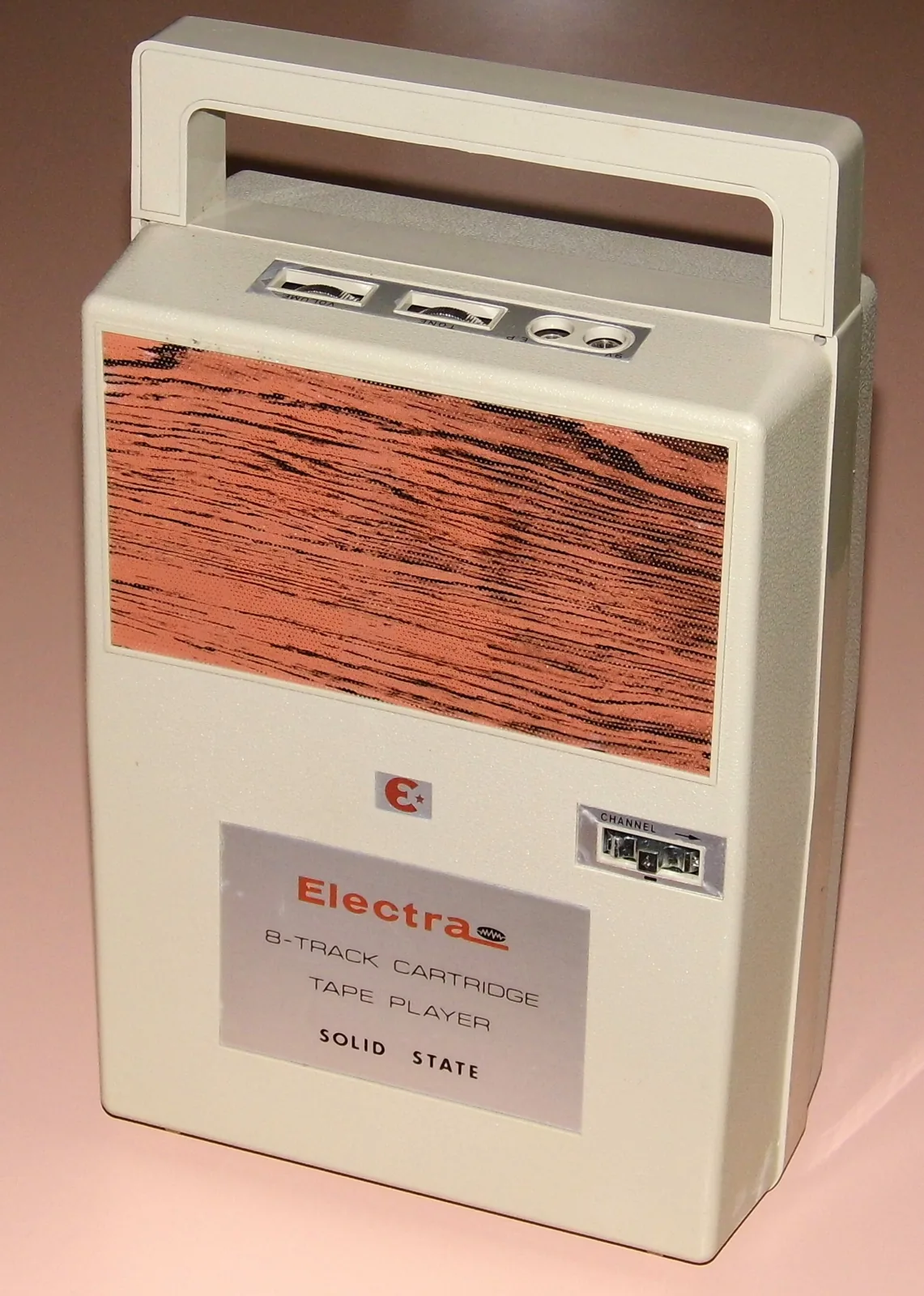
Photo: Joe Haupt · CC BY-SA 2.0 · Source

I have a lot of affection for the 8-track. It’s easy to mock, but the story of how it reached the dashboard is one of the great gadget stories, and it began with a man who built jets.
The Smithsonian’s National Museum of American History says the format was created in 1964 by a consortium led by Bill Lear, along with Ampex, Ford, GM, Motorola, and RCA. Lear was intrigued by Earl Muntz’s four-track cartridge and wanted a tape system for his Learjet business aircraft.
The History of Sound Recording Technology site adds the engineering. Lear was apparently dissatisfied with the Muntz technology, so he asked head suppliers for a head with thinner pole pieces and new spacing. That let one stereo program play from a quarter-inch tape that held eight tracks in all. In 1964, the site says, Lear’s company built 100 “Stereo 8” players for executives at the car companies and at RCA.
It worked. RCA Victor committed to mass-producing its catalog on Stereo 8 cartridges, and Ford offered the players as optional equipment on its 1966 models. A Ford spokesman said the response “was more than anyone expected,” and 65,000 players were installed that year alone. Motorola built them.
A Library of Congress interview adds detail from people who were there. John King, who joined Ford in January 1965 to work on the project, says Ford chose Motorola over Lear as the player supplier because Lear couldn’t handle mass production and guarantee the quality. R.J. King, interviewed alongside him, says RCA started with 175 albums. He says that when Ford, Motorola, RCA, and Lear brought it out in October 1965, “it was an immediate hit,” and that Chrysler, General Motors, Volkswagen, and AMC followed.
The Smithsonian notes that the 8-track eventually lost to the Philips compact cassette. But the recording history site makes the point I’d want any collector to remember: it was “the first recorded tape format to achieve a true, national mass market.”
The photo shows an Electra TP-8, a portable 8-track player made in Japan, which took the cartridge out of the car and into the house.