From 1979 to today

Walkman Timeline

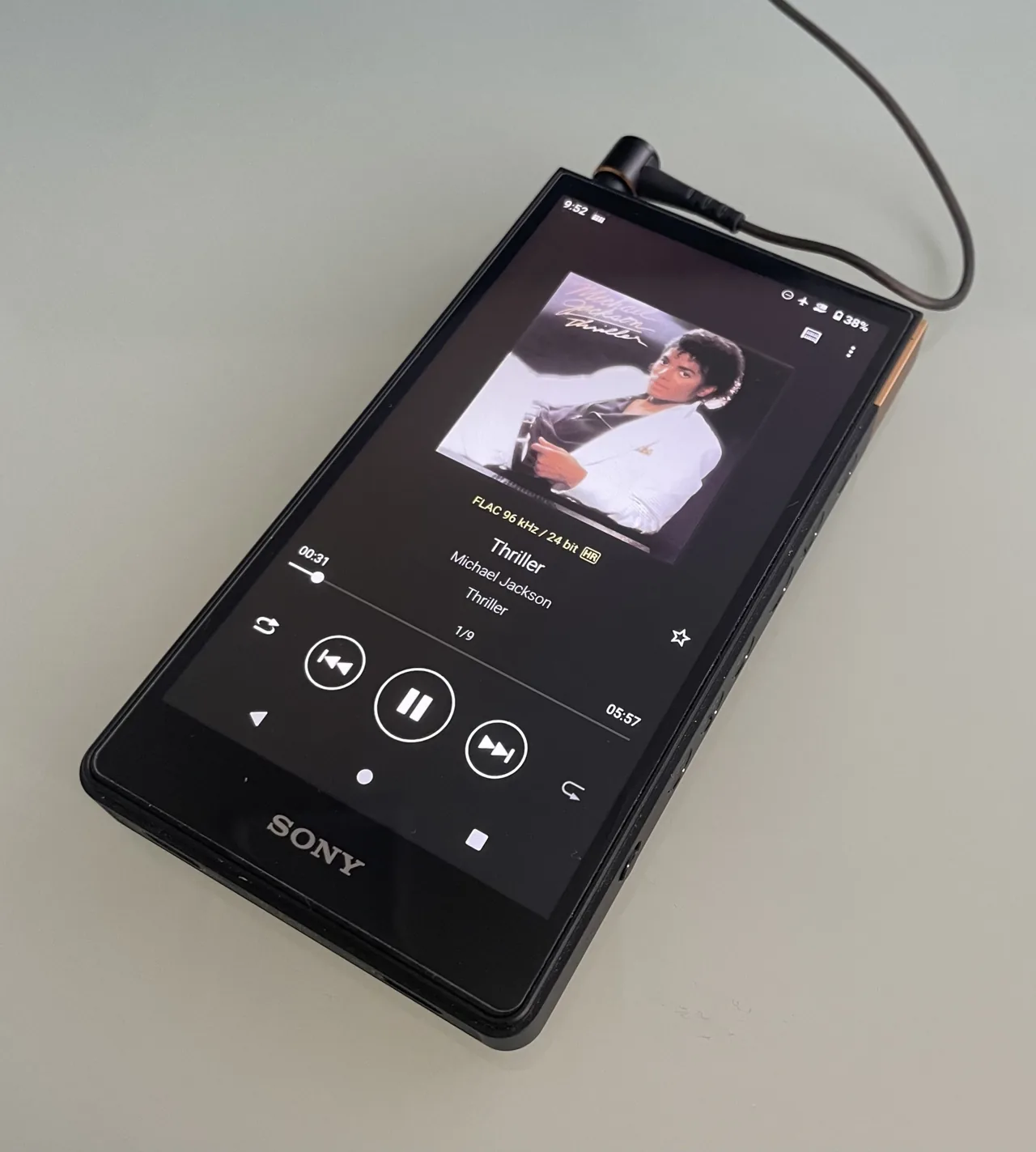
Sony put the first Walkman, the TPS-L2, on sale in Japan on July 1, 1979, and the name has never really gone away. I’ve laid out the milestones year by year. It starts with cassette players, then moves through the Discman and CD Walkman, DAT and MiniDisc, and the Network Walkman, up to today’s hi-res players. This isn’t every model Sony made. It’s the ones that changed something. Dates and firsts come from Sony’s own history pages and press releases wherever I could find them. For a few early cassette models I also lean on the Japanese Wikipedia model list, which cites the magazine Stereo Jidai. Release dates are for Japan unless I say otherwise. If I couldn’t find a freely licensed, visually verified photograph of the exact model, the card says “Photo needed.”

1979

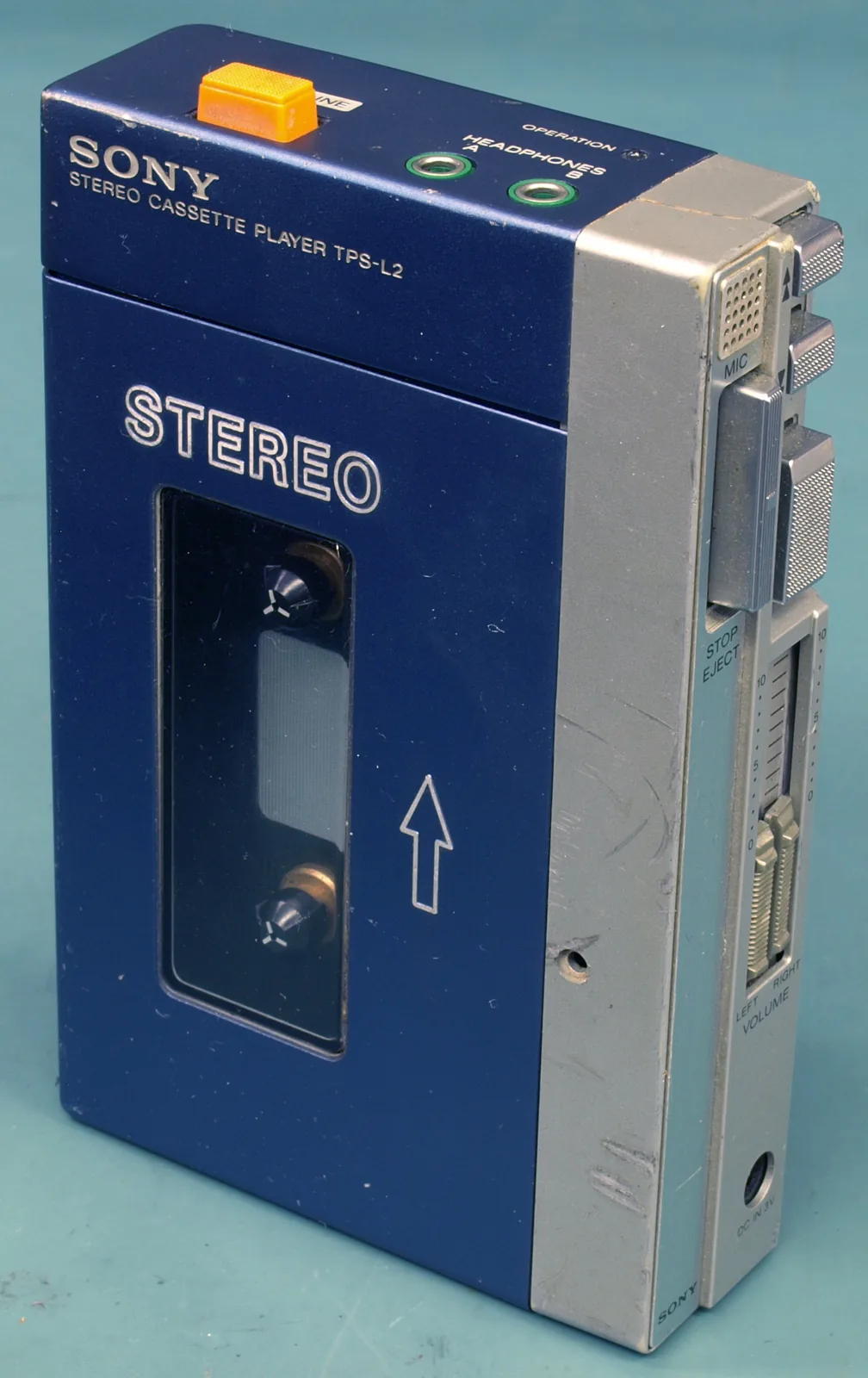
A blue and silver Sony TPS-L2 Walkman with “Stereo Cassette Player TPS-L2” printed above the cassette window and two headphone jacks on top.

TPS-L2

On sale July 1, 1979 in Japan (press launch June 22)

Format: Compact Cassette, playback only

The first Walkman, priced at 33,000 yen and sold with the 45-gram MDR-3L2 headphones. Sony built it by taking the recording function and speaker out of a cassette recorder and adding stereo circuits. It launched abroad as the Soundabout in the US, the Stowaway in the UK, and the Freestyle in Australia.

Photo: Binarysequence · CC BY-SA 4.0 · Source
1981

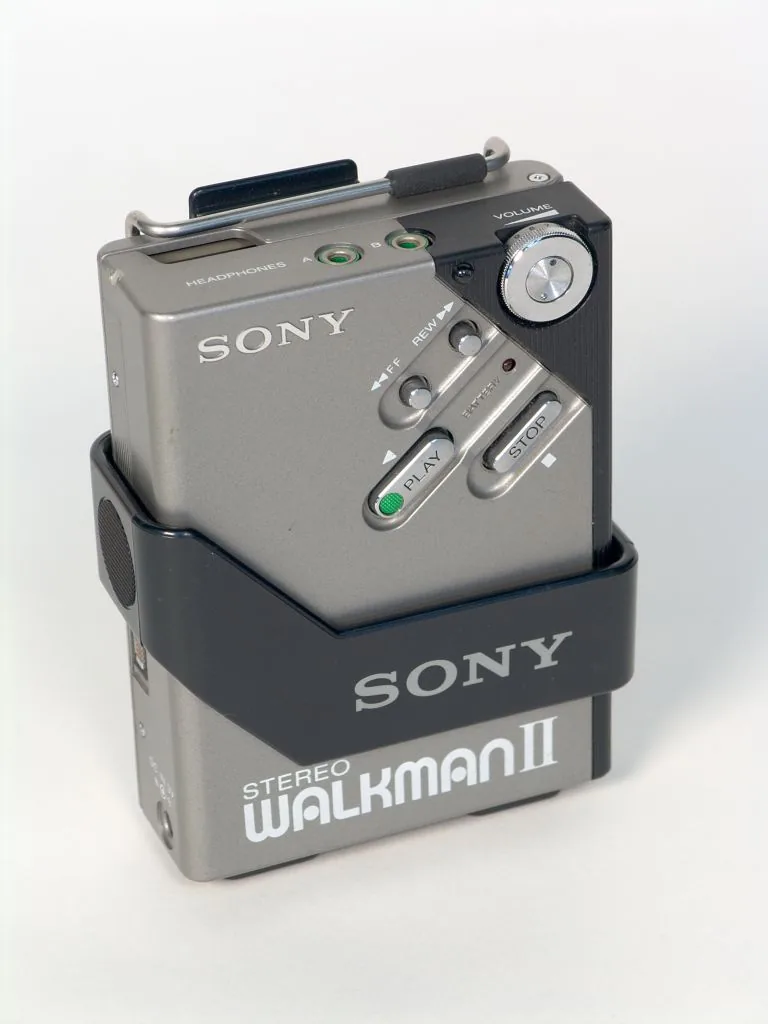
A grey Sony WM-2 cassette player with “Walkman II” lettering, photographed from the front in a black belt holder.

WM-2 (Walkman II)

1981

Format: Compact Cassette, playback only

Sony set the design first and had the engineers build to it. The result was much lighter than the first model, supported metal tape, and added an anti-rolling mechanism. Sony credits it with greatly boosting the Walkman’s popularity.

Photo: Birmingham Museums Trust · CC BY-SA 4.0 · Source

1982

WM-D6 (Walkman Professional)

February 21, 1982 (Japan)

Format: Compact Cassette, record and play

The first Walkman Professional. According to the Japanese model list, it was the first cassette Walkman with a quartz-locked capstan servo, metal-tape recording, and Dolby B noise reduction. It weighed 640 g with batteries.

WM-DD (Walkman D.D.)

1982 (Japan)

Format: Compact Cassette, playback only

A disc-drive transport with a capstan servo, offered in six colors.

1983

WM-20

October 1983 (Japan)

Format: Compact Cassette, playback only

The brief was “a Walkman in the size of a cassette case.” It runs on one AA battery, with the battery, head, pinch roller, and headphone jack in a row. The body slides open to take a cassette. It came in several colors, and the standard price was 25,000 yen.

WM-F5 (Sports Walkman)

1983

Format: Compact Cassette with FM radio

The first Walkman built for outdoor use, and the first time Sony used the yellow later seen on its sports models. It has an impact-resistant ABS case, and rubber seals over the controls keep out splashes.

1984

WM-DC2

January 21, 1984 (Japan)

Format: Compact Cassette, playback only

The Japanese model list calls this the first cassette Walkman with Dolby C noise reduction and an amorphous head, and the first playback-only Walkman Professional.

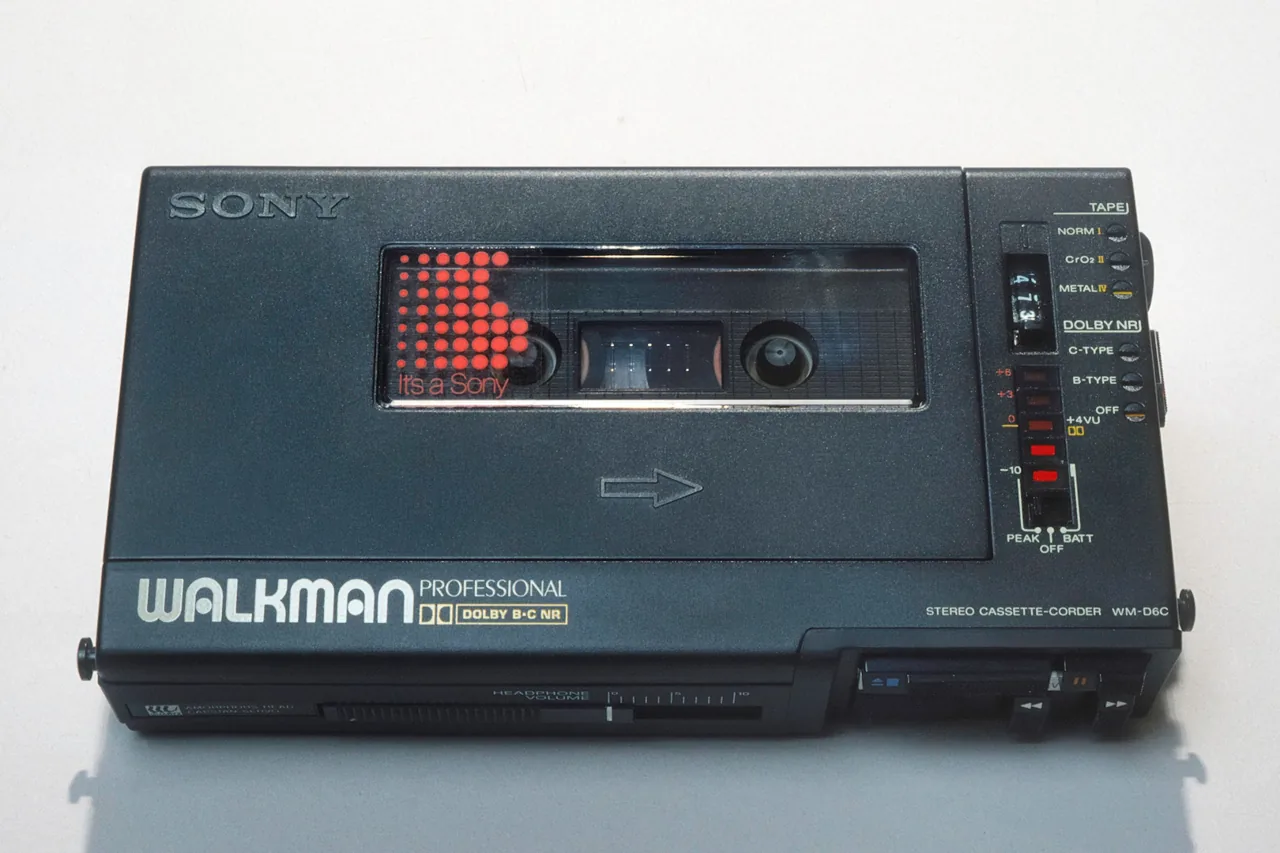
A black Sony WM-D6C Walkman Professional, seen from above, with tape and Dolby B/C selector switches beside the cassette window.

WM-D6C

February 1, 1984 (Japan)

Format: Compact Cassette, record and play

A revised WM-D6 that added Dolby C alongside Dolby B, plus a separate line input. The Japanese model list says it stayed in production until December 2000, a remarkable run for a portable recorder.

Photo: JPRoche · CC BY-SA 3.0 · Source

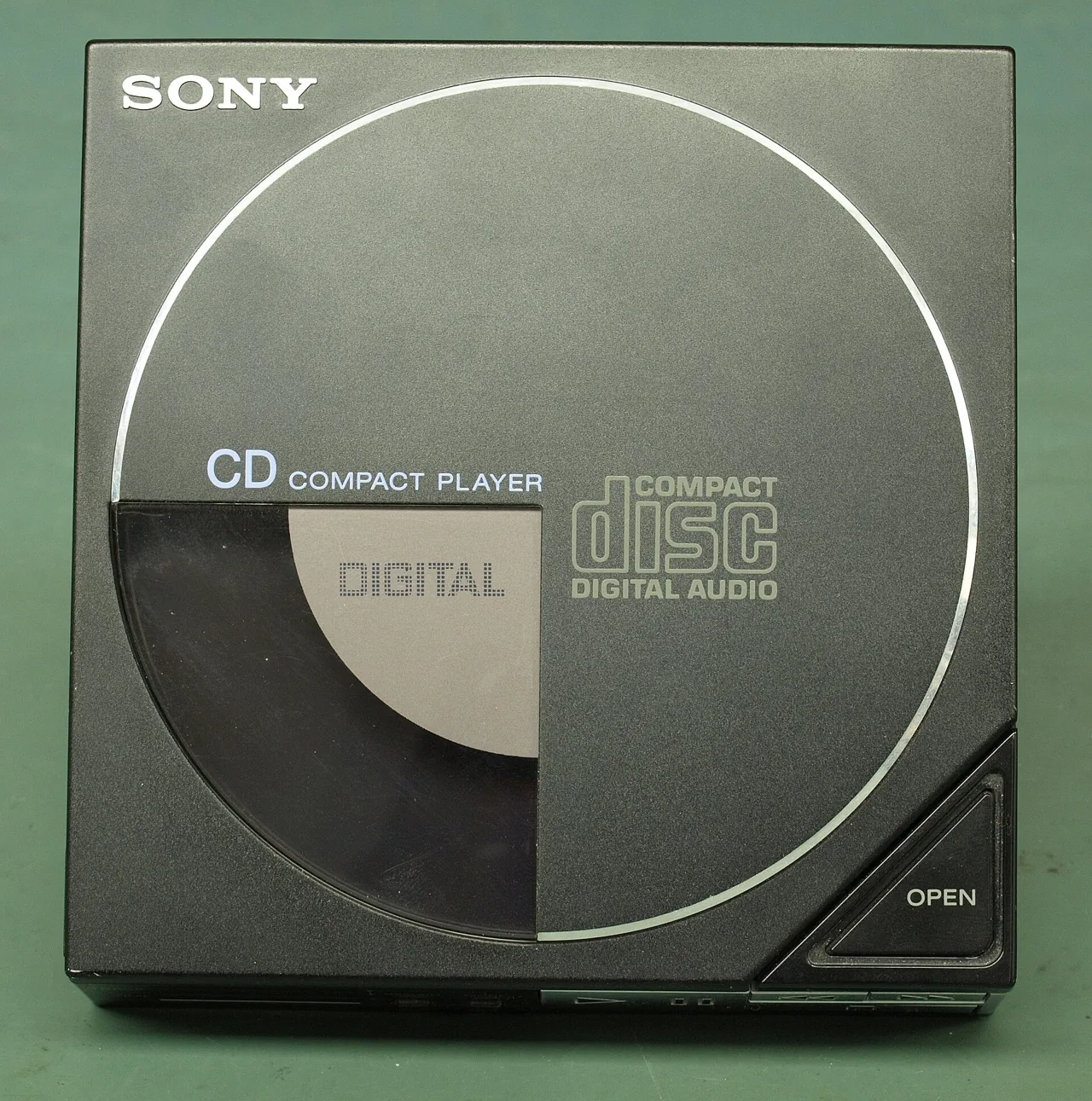
Top view of a black Sony D-50 portable CD player, marked “CD Compact Player,” with the lid closed.

D-50

November 1, 1984 (Japan)

Format: Compact Disc

The world’s first portable CD player. It was about the size of four CD cases, weighed 590 g, and sold for under 50,000 yen (49,800 yen in Japan). Sony says it single-handedly sped up the spread of the CD. This first unit is labeled “CD Compact Player.” According to the Japanese model list, the Discman logo first appeared on the D-50MkII.

Photo: Binarysequence · CC BY-SA 4.0 · Source
1985

WM-101

1985

Format: Compact Cassette, playback only

The first Walkman in its class to use a rechargeable “gum stick” battery, and it also took AA cells. Battery costs dropped, and it weighed under 200 g.

1986

WM-109

1986

Format: Compact Cassette, playback only

Sony’s 20th-anniversary timeline lists this as the first Walkman with a remote control, on the headphone cord. 1986 is also the year “Walkman” entered the Oxford English Dictionary.

1988

WM-505

1988

Format: Compact Cassette, playback only

The first Walkman sold with wireless headphones, according to Sony’s own timeline.

WM-701S

1988

Format: Compact Cassette, auto-reverse with remote

An auto-reverse player with a remote that became the basis for the 10th anniversary model. Sony also offered a silver-plated Tiffany version.

1990

WM-805

1990

Format: Compact Cassette, playback only

The first Walkman with a wireless remote control.

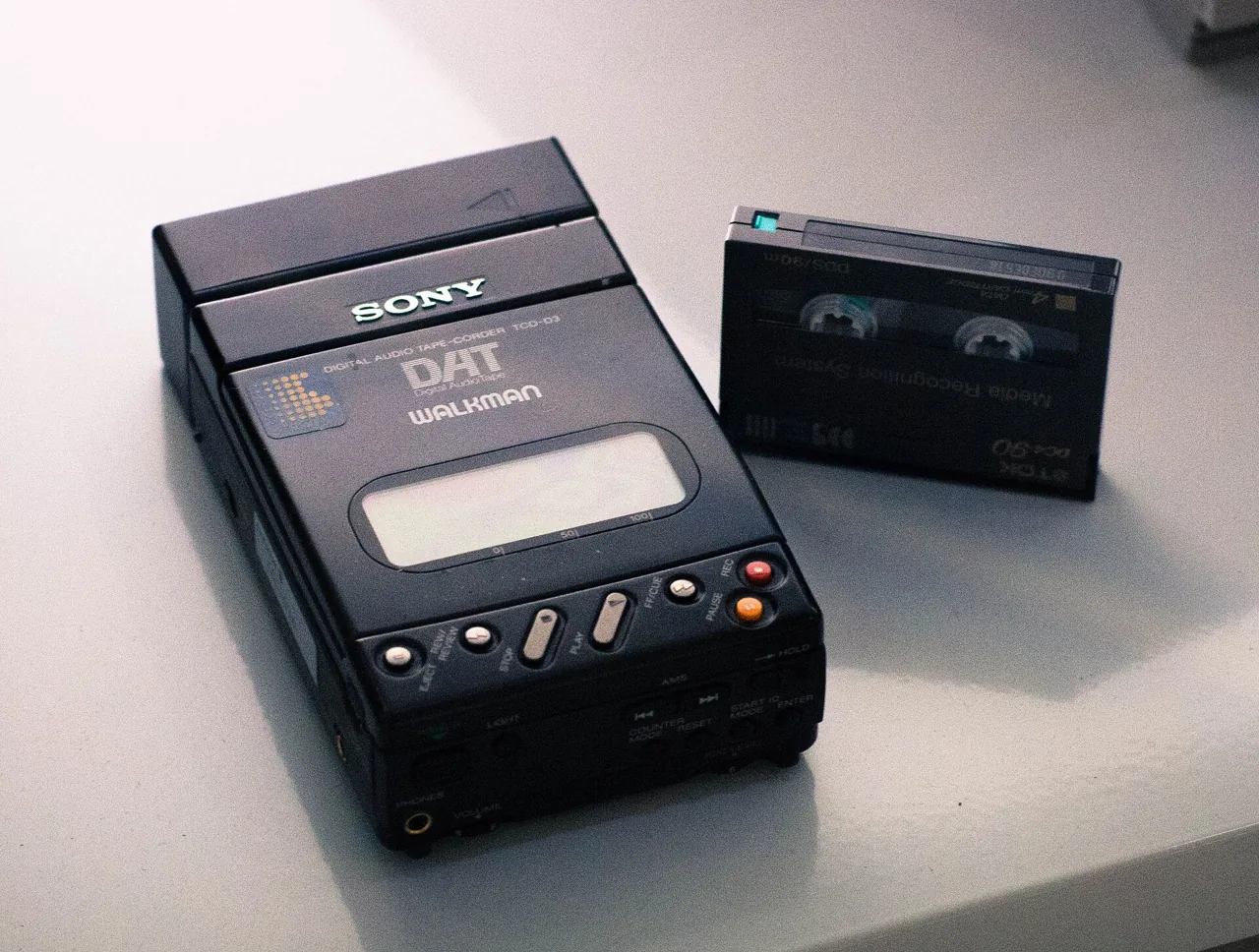
A black Sony TCD-D3 DAT Walkman next to a DAT cassette on a white table.

TCD-D3 (DAT Walkman)

1990

Format: Digital Audio Tape, record and play

The first ultracompact DAT Walkman, small enough to fit in your palm.

Photo: Kid Clutch · CC BY 2.0 · Source

1992

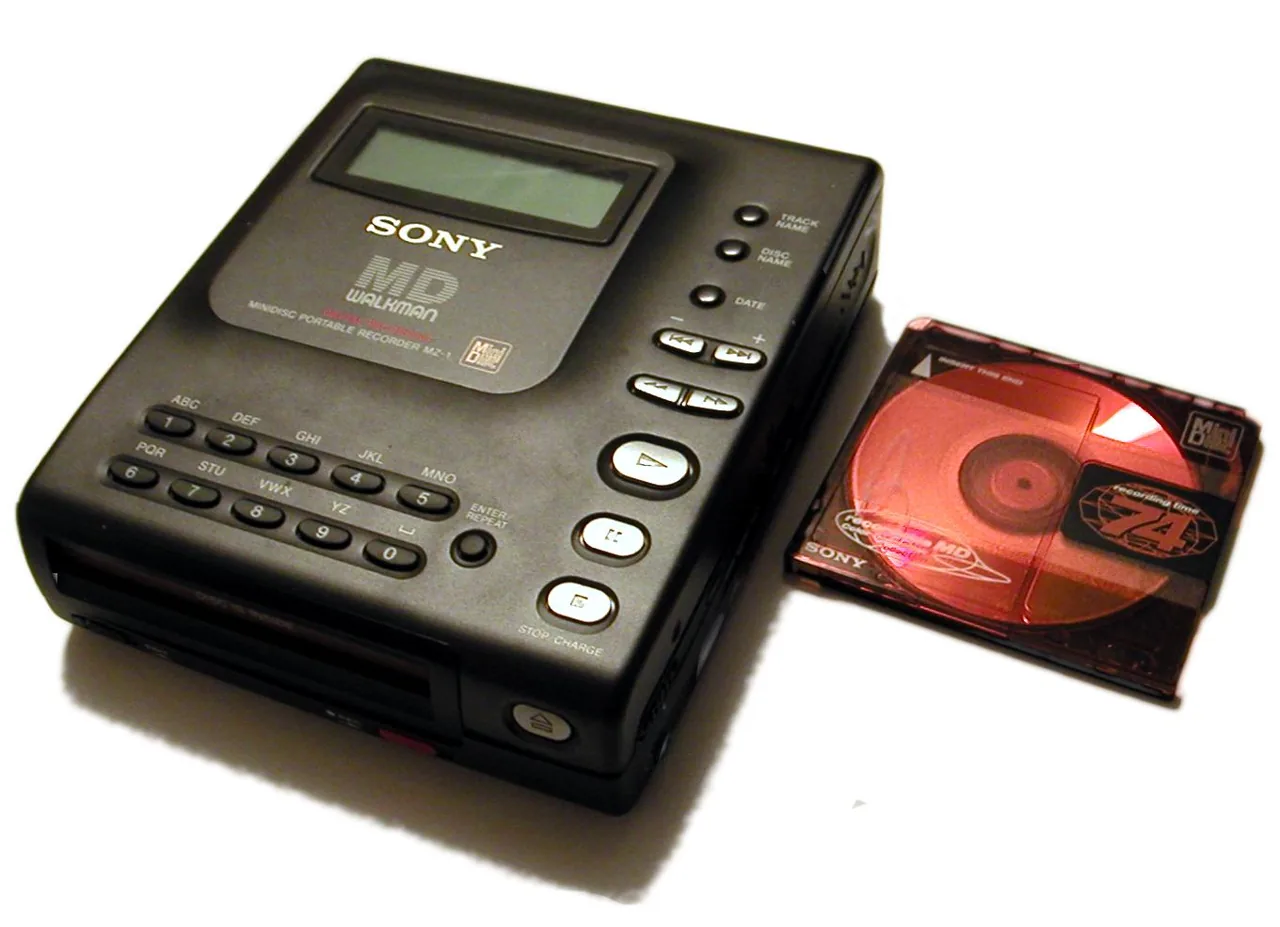
A black Sony MZ-1 MiniDisc recorder with a red MiniDisc beside it.

MZ-1

1992

Format: MiniDisc, record and play

The world’s first MD Walkman. It had recording, playback, a numeric keypad, and anti-skip memory, and it launched alongside the playback-only MZ-2P.

Photo: Nixdorf · CC BY-SA 3.0 · Source

1994

WM-EX1

1994

Format: Compact Cassette, playback only

The special 15th anniversary Walkman. It brought in vertical loading, with chrome-plated parts on the lid and a window shaped like an inverted triangle. Sony’s 1999 timeline calls the WM-EX1 and WM-EX1HG its No. 1 seller among domestic models up to then.

1996

WM-EX5

1996

Format: Compact Cassette, playback only

Sony’s timeline calls it the mirror-faced “beautiful Walkman.”

MZ-E50

1996

Format: MiniDisc, playback only

A playback-only MD Walkman that Sony billed as the world’s smallest and lightest as of September 1996.

1998

WM-EX9

1998

Format: Compact Cassette, playback only

Sony’s 20th-anniversary timeline credits it with 100 hours of continuous playback.

1999

WM-WE01

1999

Format: Compact Cassette, playback only

The cassette model in Sony’s set of four 20th anniversary products, released alongside the D-E01 CD player, the MZ-E80 MiniDisc player, and the MDR-EX70SL headphones.

D-E01

1999

Format: Compact Disc

The special 15th anniversary CD Walkman. Its G-Protection anti-skip system moved away from just buffering audio, toward stopping the skip from happening at all.

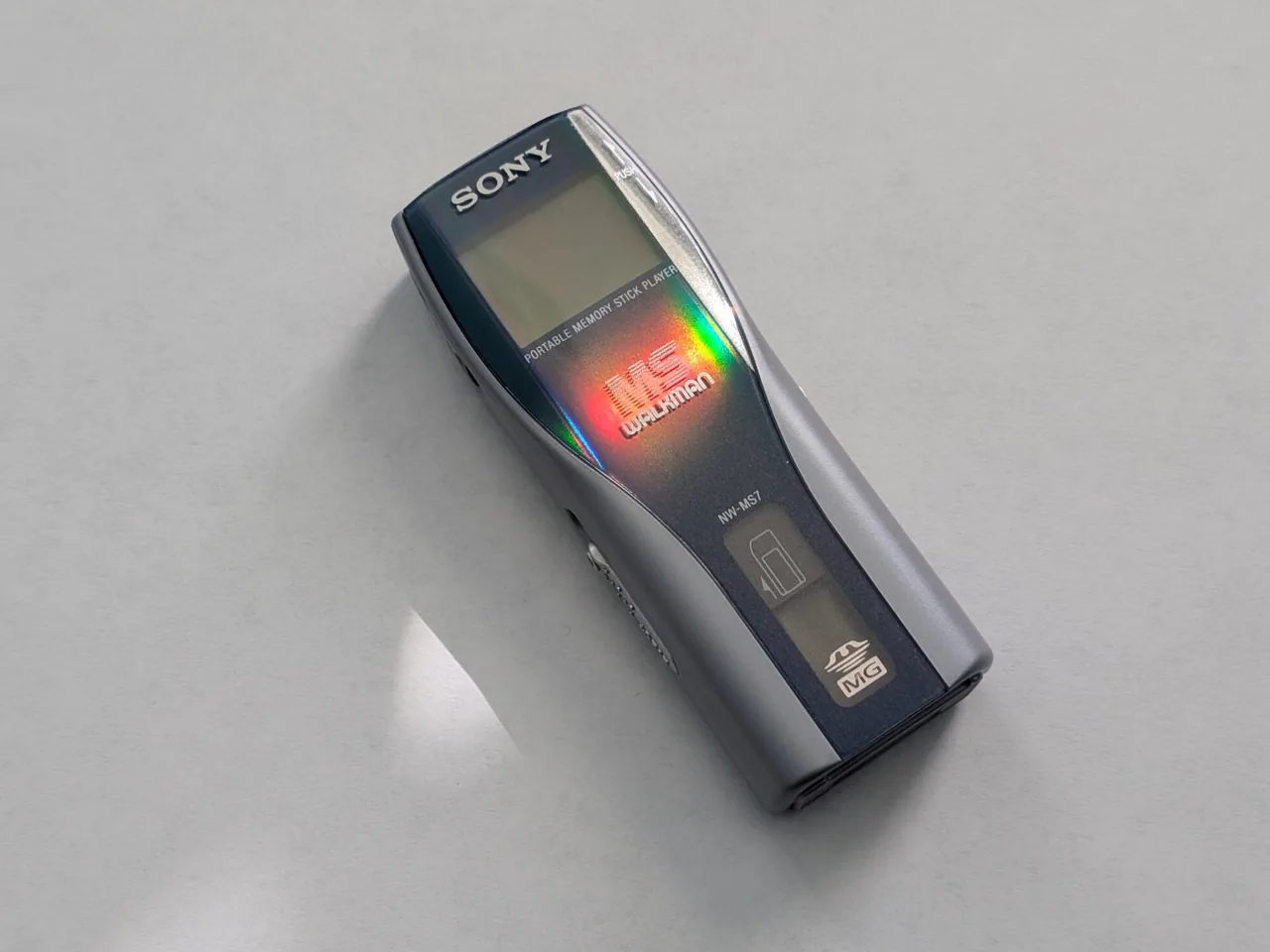
A slim silver and black Sony NW-MS7 Memory Stick Walkman lying at an angle on a grey surface.

NW-MS7 (Memory Stick Walkman)

1999

Format: Memory Stick flash memory

A Memory Stick Walkman with MagicGate copy protection. It moved the Walkman off tape and disc and onto a flash memory card.

Photo: Oprot · CC0 · Source

2001

MZ-N1

2001

Format: MiniDisc (NetMD)

The first player to support NetMD, which moved music from a PC to the Walkman at high speed. It got about 28 hours of playback in standard mode from a gum-stick rechargeable battery.

2003

NW-MS70D

2003

Format: 256 MB flash memory

Launched alongside Memory Stick Duo, with 256 MB built in. Sony quoted that as the equivalent of 11 CDs.

2004

NW-HD1

2004

Format: 20 GB hard drive

A Network Walkman with a 20 GB hard drive and about 30 hours of continuous playback. A “G Sensor” and an anti-shock damper protected the drive from knocks.

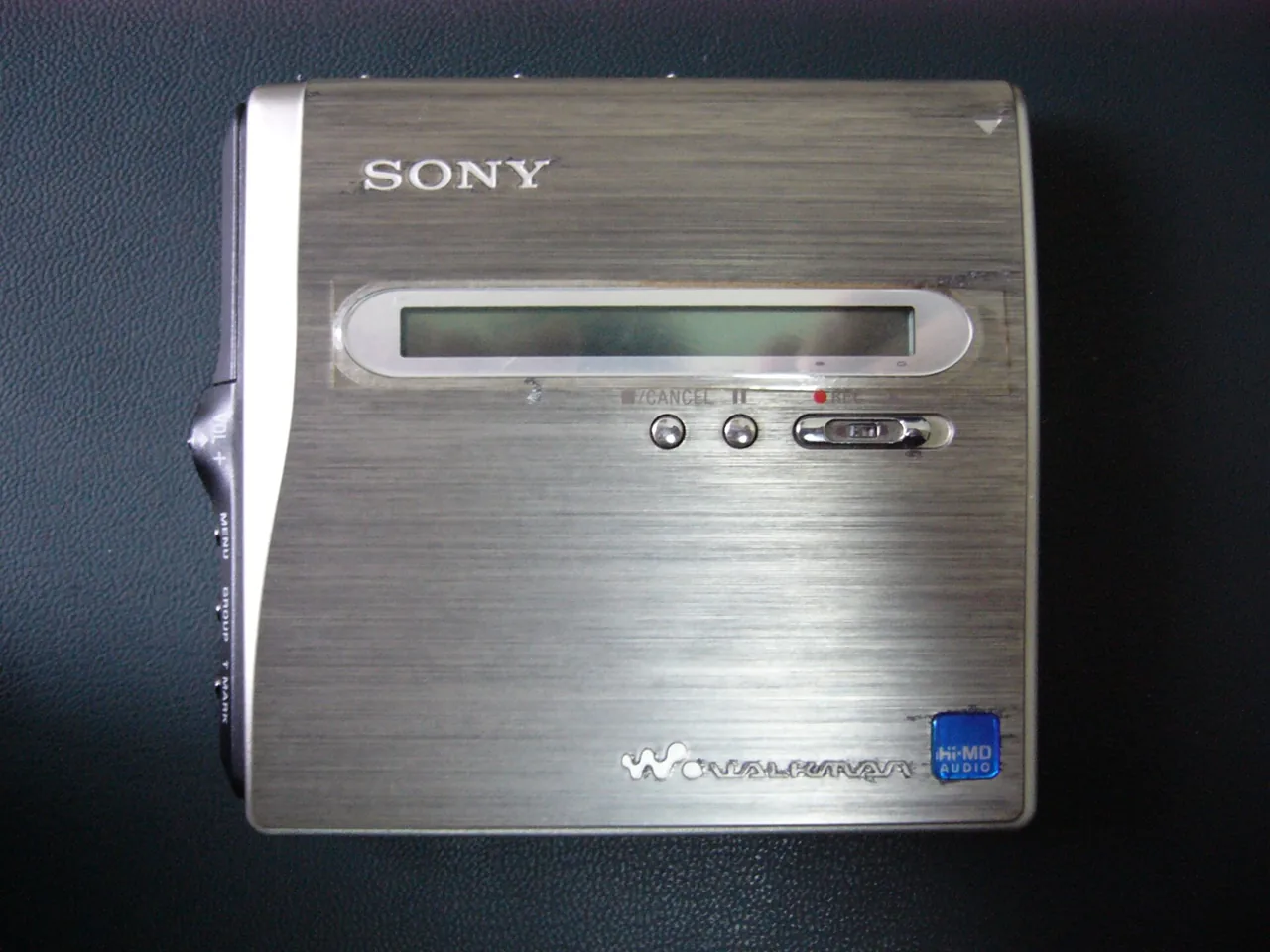
Front of a brushed-metal Sony MZ-NH1 Hi-MD Walkman with a long display window and a blue Hi-MD Audio badge.

MZ-NH1 (Hi-MD Walkman)

2004

Format: Hi-MD MiniDisc

The first Hi-MD Walkman. Its higher-density recording allowed much longer recording and playback than standard MiniDisc.

Photo: Solomon203 · CC BY-SA 3.0 · Source

WM-EX651

October 21, 2004 (Japan)

Format: Compact Cassette, playback only

According to the Japanese model list, this was the last new cassette Walkman model.

2005

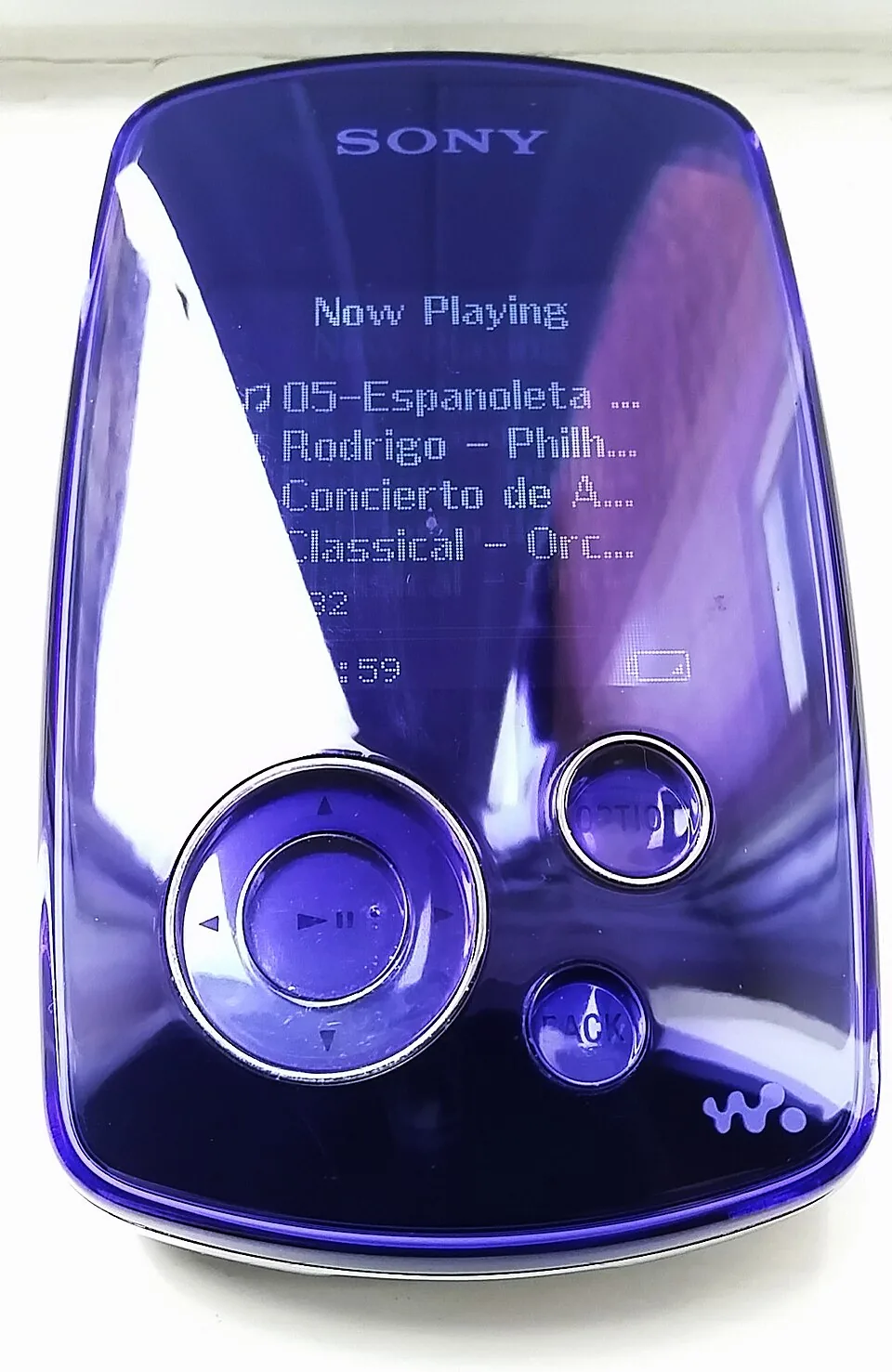
A Sony NW-A3000 Network Walkman with a glossy purple front, showing a Now Playing screen above its round controls.

NW-A3000

2005

Sony introduced the Walkman A series with this model. The A series is still going, as the NW-A300 series of 2023 shows.

Photo: Martin Rigby · Public domain · Source

2009

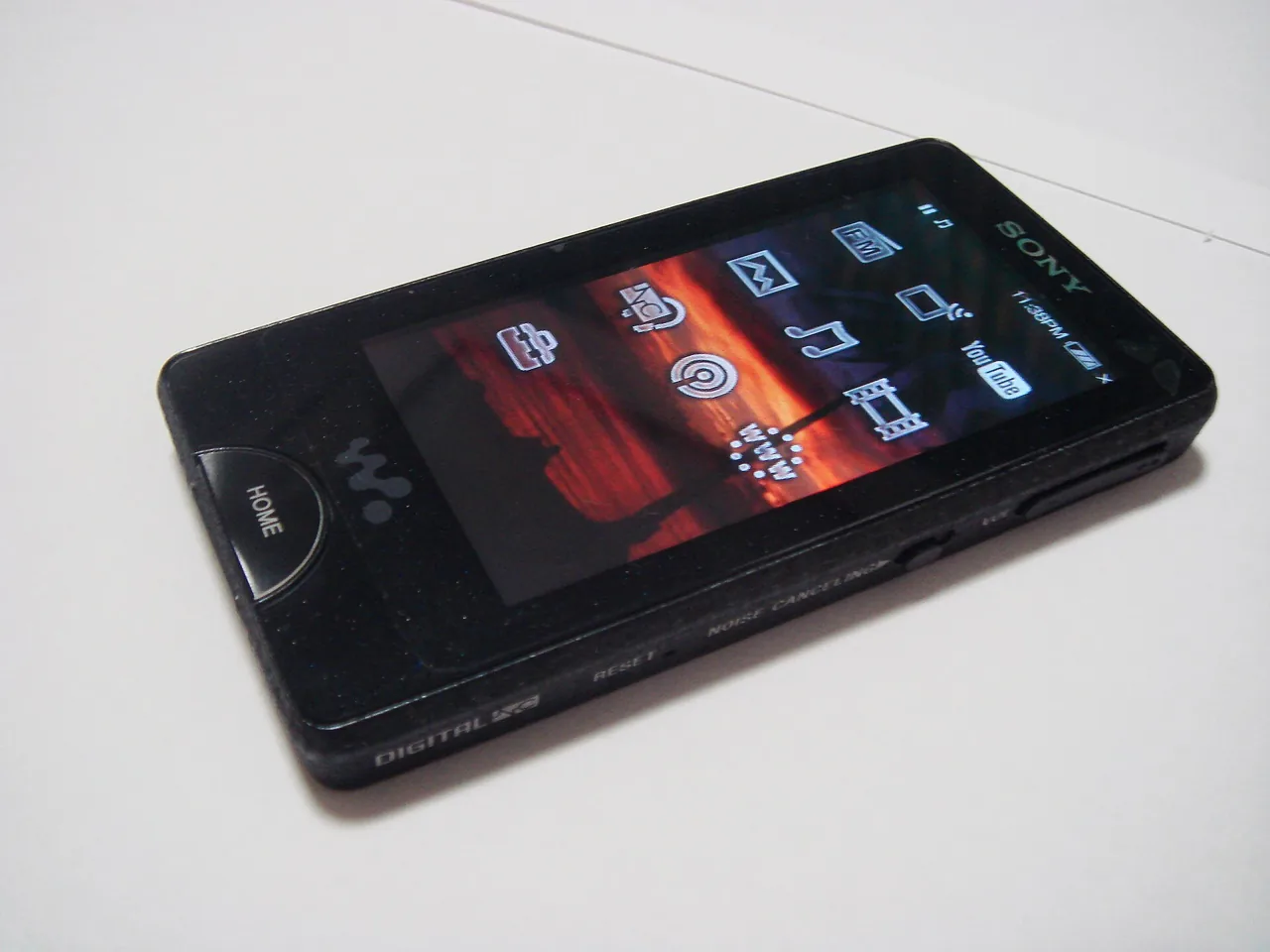
A black Sony NW-X1050 from the NW-X1000 series, with its home screen showing a grid of icons.

NW-X1000 series

2009

The X-series Walkman, which Sony pitched for music and video.

Photo: kodamatyy · CC BY-SA 3.0 · Source

2010

Cassette Walkman production ends in Japan

Announced October 22, 2010

Sony said it had shipped its final lot of cassette Walkmans in Japan in April 2010. Sony also said it had sold more than 400 million Walkmans of all kinds worldwide by March 2010. AV Watch reported that models made for overseas markets would continue.

2011

NW-Z1000 series

2011

The first Android-powered Walkman, running music, video, and apps. It introduced S-Master MX, a version of Sony’s full digital amplifier tuned for mobile devices.

2013

NW-ZX1

2013

The first Walkman to support high-resolution audio. It was also the first with the S-Master HX amplifier, in a monocoque body machined from aluminum alloy.

NWD-W273

2013

A W series Walkman built into a pair of headphones. Its improved waterproofing made it usable for swimming as well as running.

2016

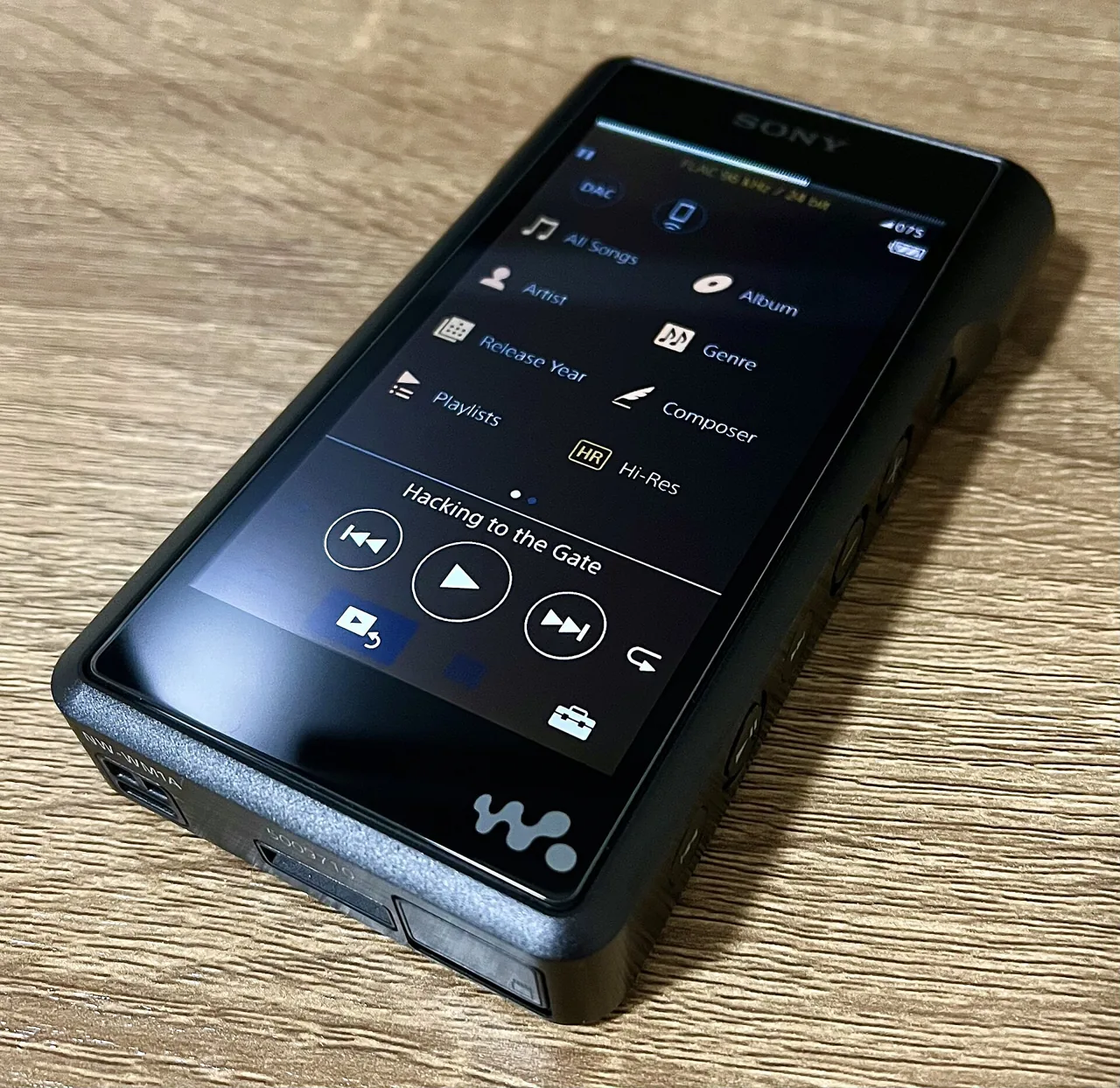
A black Sony NW-WM1A Walkman on a wooden surface, showing its music library screen.

NW-WM1Z and NW-WM1A (Signature Series)

Announced September 2016; on sale October 29, 2016 in Japan

Format: 256 GB (WM1Z) / 128 GB (WM1A)

These are the WM1 series flagships. The WM1Z has a gold-plated, oxygen-free copper chassis, and both play DSD natively up to 11.2 MHz. In the US, Sony listed the WM1Z at $3,199.99 and the WM1A at $1,199.99. The photo shows the black WM1A.

Photo: Alex Ma · CC BY-SA 4.0 · Source

2019

NW-ZX500 series

2019

A Wi-Fi Android Walkman for streaming and download services. It carries over sound-quality technology from the WM1 series and adds DSEE HX upscaling.

NW-A100TPS (40th Anniversary)

2019

Sony’s 40th anniversary set comes in a box that copies the TPS-L2 packaging. Inside is an NW-A105 printed with a 40th anniversary logo, a soft case styled after the TPS-L2, and Walkman logo stickers.

2023

A black Sony NW-ZX707 Walkman with headphones plugged in, showing a now-playing screen.

NW-ZX707

Announced January 11, 2023; on sale January 27, 2023 in Japan

Format: 64 GB

An Android 12 streaming Walkman with 4.4 mm balanced output and S-Master HX. It plays DSD natively up to 11.2 MHz, and Sony rates it at up to about 25 hours of playback.

Photo: 斎藤隼佑 · CC BY-SA 4.0 · Source

Sources

The dates and firsts come from Sony’s own history pages, design gallery, and press releases, plus contemporary reporting on the end of the cassette Walkman. For a few early cassette models I also use the Japanese Wikipedia model list, which cites Stereo Jidai magazine. Where two sources disagree, I leave the claim out. This is a run of milestones, not a catalog of every Walkman Sony made.

  1. Sony: Product & Technology Milestones, Personal Audio
  2. Sony: Sony Celebrates Walkman 20th Anniversary (July 1, 1999)
  3. Sony Design Gallery: WM-20
  4. Sony Design Gallery: WM-F5
  5. Sony Design Gallery: WM-701S
  6. Sony Design Gallery: WM-EX1
  7. Wikipedia (Japanese): ウォークマンの製品一覧 (list of Walkman products)
  8. TechCrunch: End Of An Era: Sony Stops Manufacturing Cassette Walkmans (October 22, 2010)
  9. AV Watch: ソニー、カセット型ウォークマンの生産・販売終了 (October 22, 2010)
  10. Sony: One Signature Sound: Sony Pushes the Boundaries with Ultimate ‘Signature Series’ Audio Range (September 1, 2016)
  11. Sony Japan: Signature Series press release (September 8, 2016)
  12. Sony Japan: NW-ZX700 and NW-A300 series press release (January 11, 2023)