Collections · Reel-to-Reel
How Bing Crosby Bankrolled the Ampex 200A, America’s First Production Tape Recorder
Bing Crosby wanted to stop doing his radio show live twice a night. His order for 20 Ampex recorders at $4,000 each helped pay for the Model 200A, and serial numbers 1 and 2 went to Jack Mullin in April 1948.
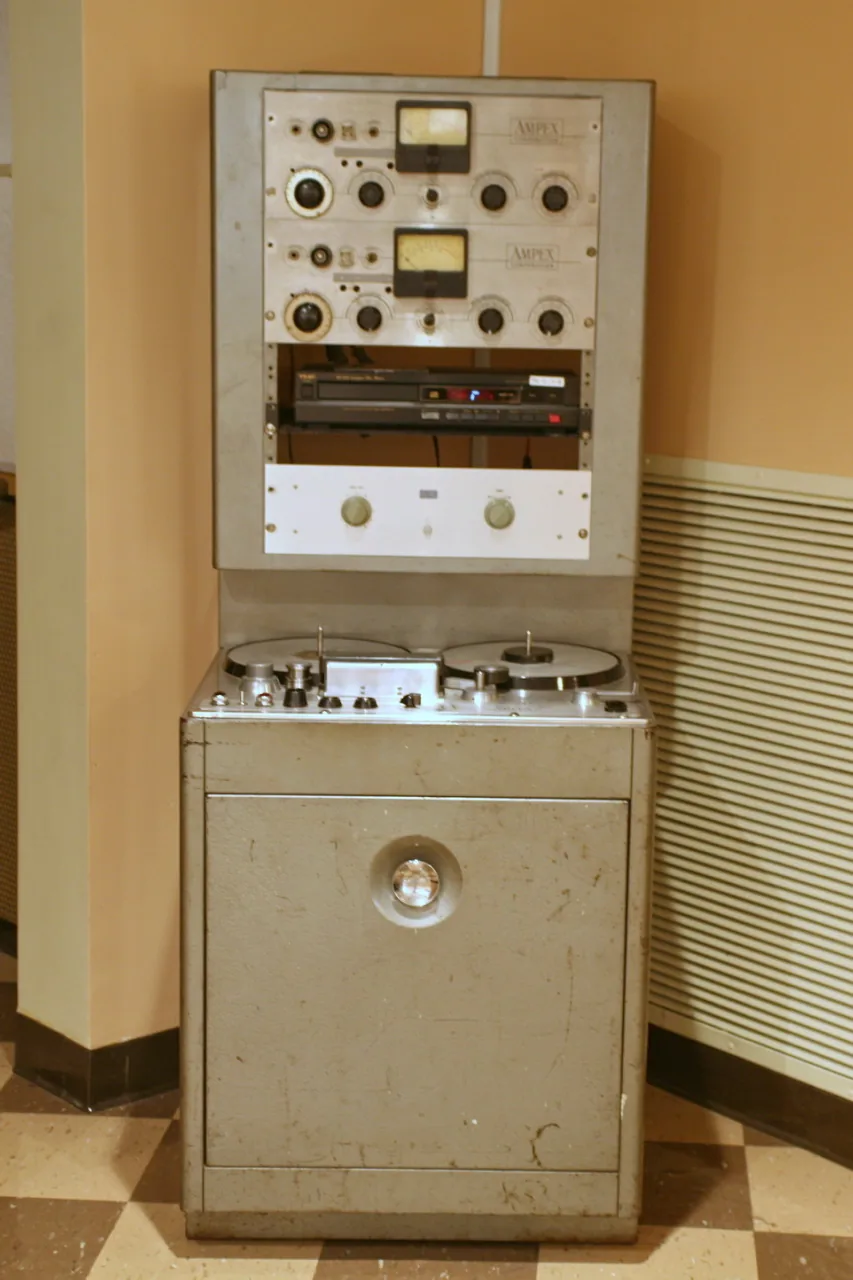

If you collect reel-to-reel, the Ampex 200A is close to holy ground. It’s the machine that made tape a business in America, and a crooner who didn’t like doing his show twice helped pay for it.
Ampex’s own early history explains the problem. Bing Crosby had to do two “live” radio shows each night, one for the East and another three hours later for the Pacific time zone. The company says getting through one error-free was hard enough. He needed to record and edit.
Jack Mullin already had a workaround. The AES history page on him says he used his two rebuilt German Magnetophons and 50 reels of tape for 26 Crosby shows in the 1947–48 season. Each reel ran 22 minutes. He recorded the afternoon rehearsal and the evening show, then edited the broadcast from both.
Meanwhile, Ampex engineers Harold Lindsay and Myron Stolaroff had a prototype by October 1947. Ampex’s history says it played Magnetophon tapes very well but still had trouble making its own recordings. Mullin took it to Crosby’s ABC studio anyway and played back part of that night’s recording. “Fortunately, no one asked Jack to record anything,” the company history notes. I love that line.
It worked. In John Leslie’s AES account, Crosby ordered 20 recorders at $4,000 each with a 60 percent down payment, which helped finance Ampex’s first production run. In April 1948, Ampex delivered serial numbers 1 and 2 to Mullin. Leslie says they retired his two Magnetophons, which were “mighty tired and difficult to keep working properly.” When ABC wanted machines to record shows for playback three hours later out West, Crosby sold it 10 of his 20. Serial number 3 went to ABC that April. Stanford University Libraries owns it today, and Larry Miller restored it.
The Bing Crosby Internet Museum adds a detail tape fans will appreciate. The 200s couldn’t dub, so editing still meant cutting and splicing. Near the end of the Philco run, Ampex introduced the model 300, which could.
That’s why the photo shows a model 300, a later Ampex, in a half-inch three-track version at RCA Studio B. I couldn’t find a freely licensed photo of a 200A.
Sources
- John Leslie, “Celebration of Larry Miller’s Restoration of Stanford University Libraries’ Ampex Magnetic Tape Recorder, Model 200A” (AES Historical Committee)
- History of the Early Days of Ampex Corporation (Ampex)
- John Mullin (AES Recording Technology History)
- Philco Radio Time 1948-49 (Bing Crosby Internet Museum)