Handheld · History
The Rio PMP300 and the 1999 Ruling That Called Portable MP3 Playback “Space-Shifting”
Before the iPod, the recording industry tried to stop Diamond Multimedia’s Rio PMP300 in court. The Ninth Circuit’s June 1999 ruling let the little MP3 player stay on sale, and its reasoning still reads well.
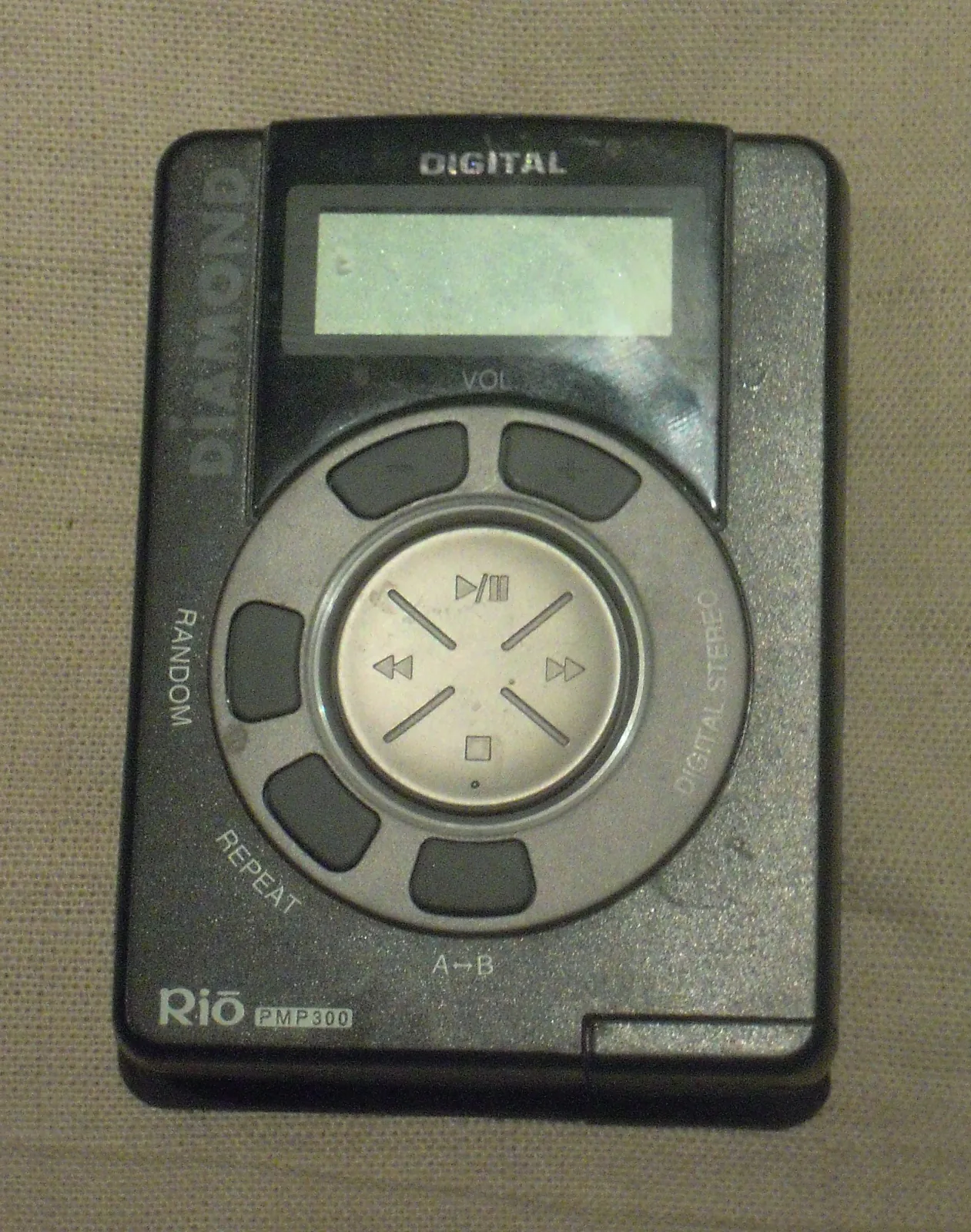

When people trace the portable MP3 player back to its roots, they usually land on the Diamond Rio PMP300. It’s a little slab of a thing, and its story matters because it went to court before most people had heard of MP3.
The Recording Industry Association of America and the Alliance of Artists and Recording Companies tried to block Diamond Multimedia from making and selling the Rio. Their argument was that it counted as a “digital audio recording device” under the Audio Home Recording Act of 1992, which would have required copy controls. On June 15, 1999, the U.S. Court of Appeals for the Ninth Circuit disagreed.
The opinion, written by Judge O’Scannlain, describes the hardware in plain terms. The court called the Rio “a small device (roughly the size of an audio cassette) with headphones that allows a user to download MP3 audio files from a computer and to listen to them elsewhere.” Music went across through Diamond’s Rio Manager software and a parallel port cable. The court said the Rio could hold “approximately one hour of music,” with room for more on flash memory cards, and that its only output was an analog signal to the headphones.
The legal heart of the case was simple. The Rio could only copy from a computer hard drive. It couldn’t copy straight from a CD or from a broadcast. Hard drives hold far more than music, so the court found they weren’t “digital music recordings” under the Act, and the Rio didn’t fit the definition.
Then comes the line I like best. The court wrote that “the Rio merely makes copies in order to render portable, or ‘space-shift,’ those files that already reside on a user’s hard drive,” and called that “paradigmatic noncommercial personal use.” It drew the comparison to the Betamax case and its “time-shifting.” The denial of the preliminary injunction was affirmed.
For anyone who collects early digital players, that ruling is part of the Rio’s story. It’s not bad for a player that held about an hour of songs.