Collections · Reel-to-Reel
TEAC’s A-3340 and Simul-Sync: The Reel-to-Reel That Brought Multitrack Recording Home
TEAC launched the four-track A-3340 in 1972 for quadraphonic playback. Musicians wanted multitrack instead, and the Simul-Sync head on the A-3340S let them overdub in sync at home.
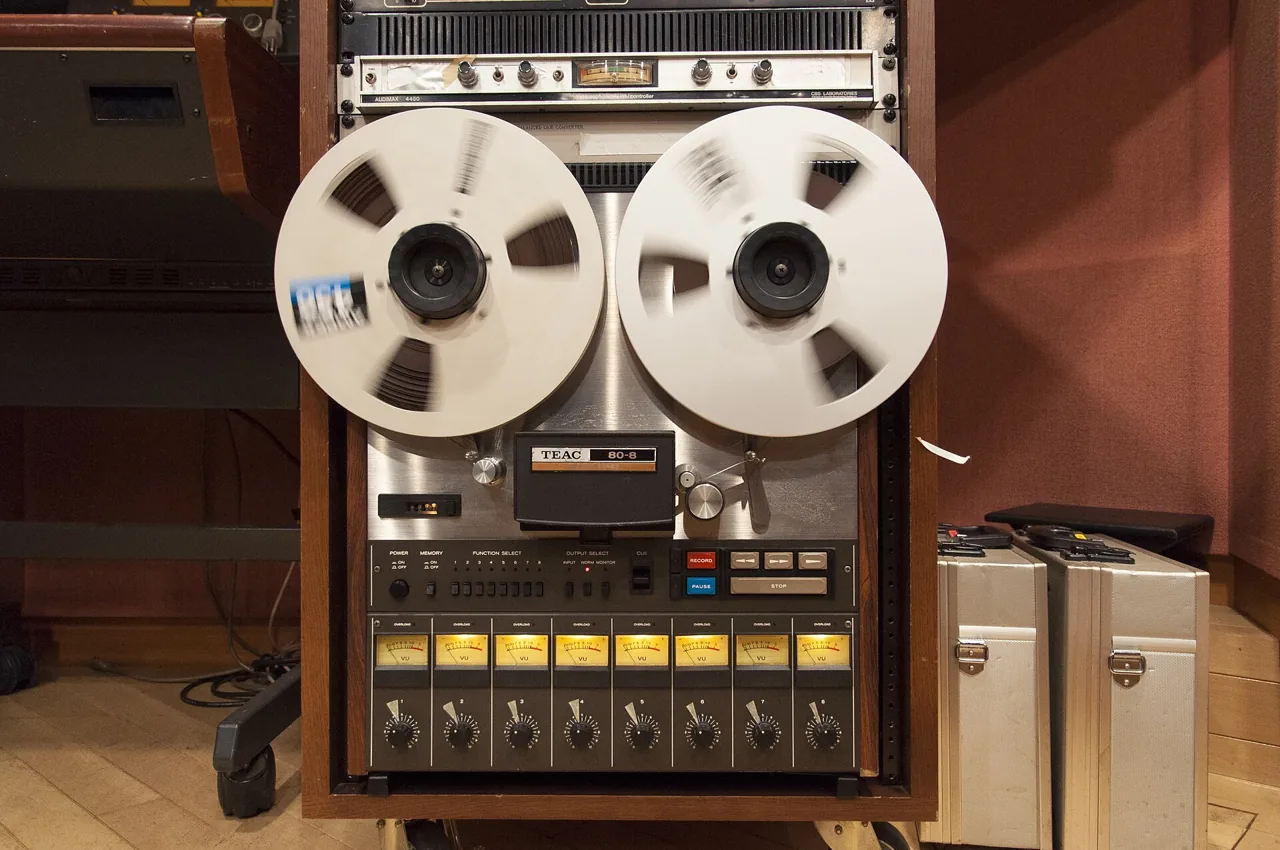
Photo: JacoTen · CC BY-SA 2.0 · Source

Before the home studio was a laptop, it was a reel-to-reel with four tracks and a very forgiving family. The machine that set that up was TEAC’s A-3340, and it wasn’t built for musicians at first.
National Museums Liverpool dates the A-3340 to 1972. The museum says it copied the multitracking abilities of the professional studio. You could record four tracks at different times, then balance them on playback to make a final mix. It also calls this early TEAC “the template for the multitude of four-track portable studios which were to follow.”
A 2022 company portrait for TASCAM’s 50th anniversary, published by Professional Audio and hosted by TASCAM Europe, fills in the twist. TEAC meant the A-3340 to play quadraphonic sound on its four tracks. Quad didn’t take off the way TEAC expected, but musicians got very interested in modified multitrack versions. The fix was “Simul-Sync.” According to the article, a modified A-3340S introduced a new tape head that, for the first time, could record and play back at the same time. That let you lay new parts on top of existing takes in sync. “Musicians loved it,” the article says.
The same piece explains where TASCAM comes from. In 1971, the Tani brothers of TEAC and Dr. Abe Yoshiharu set up TASCAM, short for TEAC Audio Systems Corp plus “AM” for America. Early on it converted TEAC 4010 recorders into the Simul-Sync TCA-40 series. The first TASCAM multitrack machines were still sold under the TEAC name.
The article’s timeline adds two stories I can’t resist. In 1976, it says, the Eagles’ Don Felder composed “Hotel California” with the help of a small TEAC four-track. And in 1977, the voices for R2-D2 and C-3PO in Star Wars were recorded on a TASCAM 80-8.
I couldn’t find a freely licensed photo of an A-3340, so the picture shows its bigger relative, a TEAC 80-8. The article describes the 80-8 as an eight-track half-inch machine.